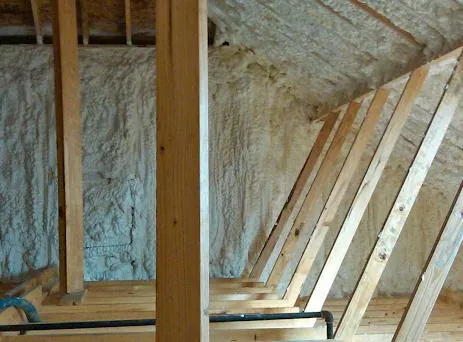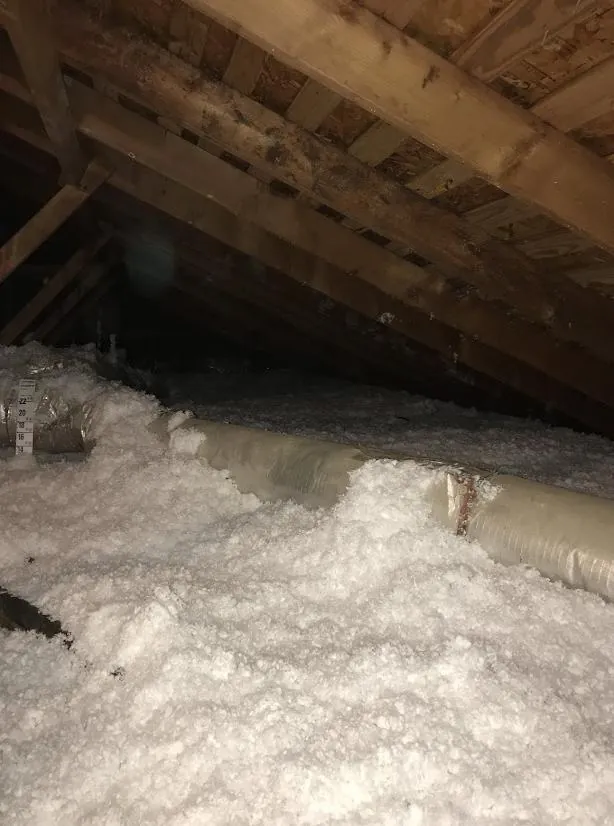
The attic is where most houses lose the most heat in winter and gain the most in summer. If the insulation on your attic floor is thin, patchy or flattened, your furnace and AC are making up the difference.
Blown-in insulation goes in through a hose that spreads loose fill evenly over the attic floor, around wires, ducts and framing that batts struggle to cover. It is a good way to add depth to what you already have, or to start fresh after old material is removed.
Signs your attic needs more
- You can see the tops of the floor joists
- Snow melts off your roof faster than your neighbors'
- The rooms under the attic are hotter or colder than the rest
- The insulation is thin, wet, flat or full of gaps
- Your heating and cooling run all the time and still cannot keep up
How the job goes
Measure what is there
We check how deep and how dry the existing insulation is, and look for vents and wiring.
Prep the attic
We add baffles at the eaves to keep air paths open and move anything in the way.
Blow it in
The loose fill goes down evenly to the planned depth.
Mark the depth
Depth markers show how much went in.
Clean up
We take our equipment out and leave the access tidy.
What it does for you
Even coverage
Loose fill settles around framing and pipes without gaps.
Quick
Many attics are done in a single visit.
Comfort
It often evens out the temperature in the rooms below.
What affects the job
We work out the amount from the attic's area and the depth you are aiming for, minus what is already there. An open attic floor with clear access is quick. An attic full of boxes, tight eaves or low clearance takes longer, because we have to work around everything and keep the fill even.
We also look for things that should be fixed first. Roof leaks, bathroom fans venting into the attic and gaps around wiring all cause trouble later if they get buried. Sealing air leaks before insulating makes the new layer work much better, and we will tell you if that is worth adding. Insulation also has to stay clear of recessed lights that are not rated for contact, and of chimneys and flues, so we install barriers where needed.
Where we do this work
We provide blown-in attic insulation throughout Elizabeth, including Elizabethport, Downtown Elizabeth, Midtown, North Elizabeth, Elmora and the surrounding area, and in nearby towns such as Hillside, Roselle, Roselle Park, Union, Linden. If your attic is damp, dirty or old, look at attic insulation removal first. Ask about attic air sealing too, so leaks are sealed before the new layer goes on.
Common questions
How much insulation do I need?
It depends on what you have now and the recommended levels for our area. We measure and explain what we suggest.
Can you add on top of what I have?
Often, if the old insulation is dry and in good shape. If not, it may need to come out first.
Will it block attic ventilation?
It should not. We keep the vent paths open with baffles where needed.
What about recessed lights and chimneys?
They need proper clearance and barriers. We keep insulation a safe distance from heat sources.