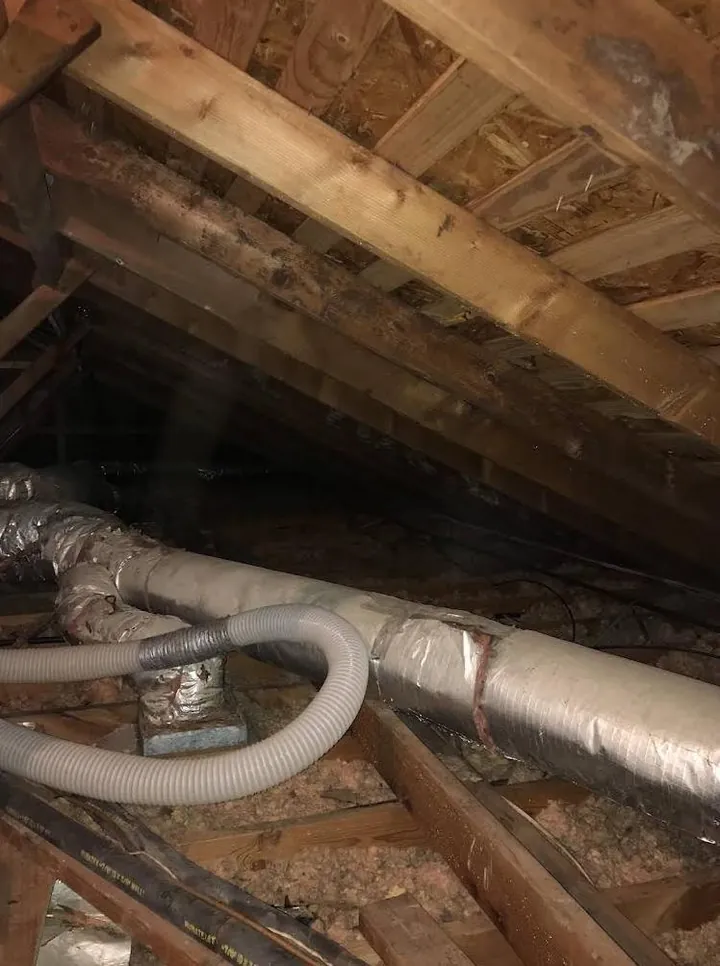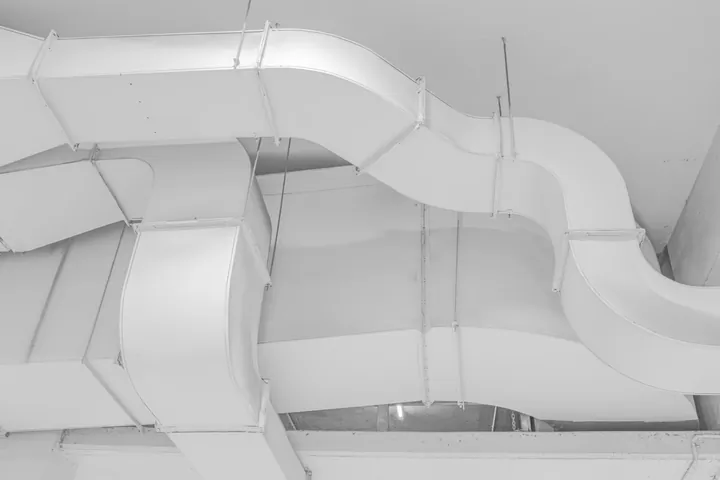
Ducts that run through an attic, basement or crawl space carry conditioned air through spaces that are freezing in winter and sweltering in summer. If those ducts are bare, or the old insulation has crumbled, the air changes temperature before it reaches your rooms. In summer, cold ducts in a warm space can also sweat and drip onto ceilings and framing.
We wrap exposed ducts with insulation made for the job, seal the seams, and cover the joints and fittings. It makes sense for houses with long duct runs outside the heated space, and it goes well with duct sealing, since leaks and heat loss are two separate problems.
Signs your ducts need wrapping
- There is bare metal duct in the attic, basement or crawl space
- The old duct insulation is torn, missing or crumbling
- You see water stains or drips on ceilings under duct runs in summer
- Rooms at the end of a long run never get warm or cool enough
- You can feel hot or cold coming through the metal
How the job goes
Look at the exposed ducts
We follow the runs through unheated spaces and note what is bare or damaged.
Seal first
Leaky seams get sealed so we are not insulating an air leak.
Wrap the ducts
Insulation is fitted around the duct and secured so it does not sag.
Cover the joints and fittings
Elbows, boots and connections get wrapped and taped so the barrier is continuous.
Check the runs
We make sure coverage is complete and the insulation is not crushed or pinched.
What it does for you
Less heat gained or lost
Insulated ducts deliver air closer to the temperature your system made.
Less condensation
A proper, continuous barrier cuts sweating on cold ducts.
A sensible upgrade
It is a reasonable step for long runs through attics and crawl spaces.
What affects the job
How much wrapping you need depends on how much duct is exposed and where it runs. A short run in an attic is a quick job. Long runs through a crawl space, or a big attic with branches going every direction, take longer. Access is the main variable. Tight crawl spaces and low attics slow us down.
We also look at what is already there. Insulation that is damp or falling apart comes off before new goes on, and leaky seams get sealed first. In humid summers, ducts carrying cold air can sweat if the vapor barrier has gaps, so careful sealing of joints and seams is a big part of doing this right.
Where we do this work
We provide duct insulation & wrapping throughout Elizabeth, including Elizabethport, Downtown Elizabeth, Midtown, North Elizabeth, Elmora and the surrounding area, and in nearby towns such as Hillside, Roselle, Roselle Park, Union, Linden. Start with duct repair & sealing if the seams leak, and think about new ductwork installation when you add or move runs.
Common questions
Should ducts in a basement be insulated?
If the basement is unheated, yes, it helps. If it is heated living space, the benefit is smaller. We look at your setup.
Can you insulate ducts that already have old insulation?
Sometimes we can wrap over good material, but crumbling or wet insulation should come off first.
Will wrapping fix a duct that sweats?
It usually helps a lot, as long as the vapor barrier is continuous. We seal and cover all the seams to get that.
How is this different from air sealing the attic?
Wrapping insulates the ducts themselves. Attic air sealing closes gaps in the attic floor. Many houses benefit from both.