Rooms tucked under the roof are famously hard to keep comfortable. The ceiling follows the roof slope, so there is no attic floor to insulate, and the space between the rafters is shallow. Finished attics, dormers and cathedral ceilings all fit this, and a lot of them were built with too little insulation, or none.
We insulate along the roofline, working between the rafters to bring these rooms up to a comfortable standard. Depending on the framing and how much depth there is, we may suggest spray foam, rigid board or a mix. We are careful about ventilation and moisture too, since the roof deck has to be able to stay dry.
Signs your roofline needs attention
- The top-floor room is much hotter in summer than the rest of the house
- Ice dams form at the edge of the roof in winter
- The finished attic or dormer is chilly even with the heat on
- Snow melts first on the part of the roof over that room
- You are re-roofing or redoing the ceiling and the framing is exposed
How the job goes
Look at the roof framing
We check the rafter depth, existing insulation, ventilation and any signs of leaks.
Plan for moisture and air
We decide whether to keep a vent channel or use a sealed approach.
Prep the room
We protect the area and clear obstructions.
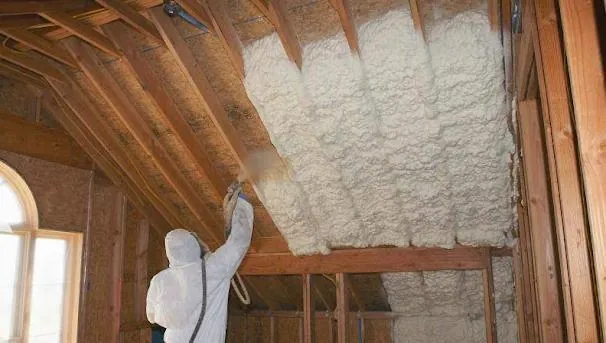
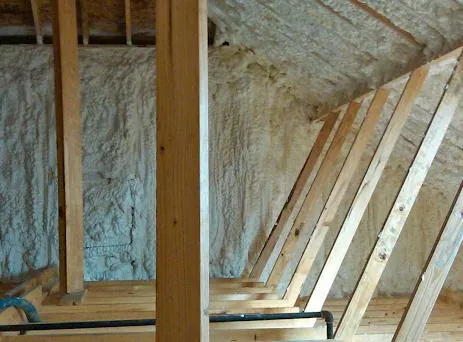
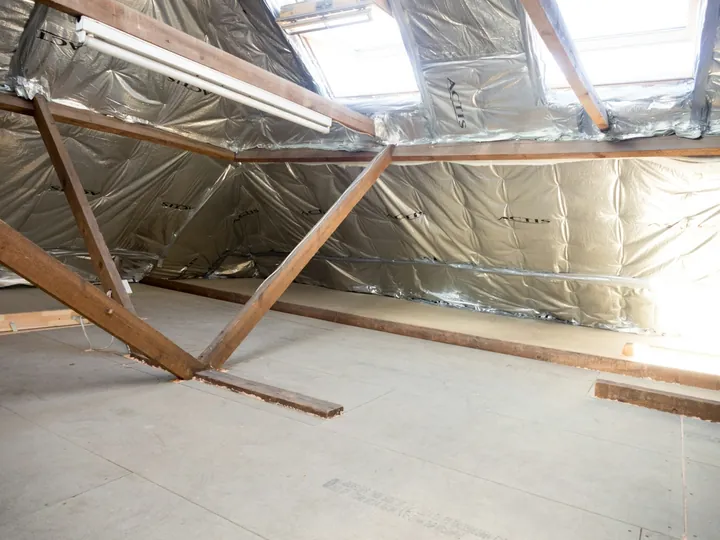
Insulate between the rafters
Foam or rigid insulation goes in to the planned depth.
Check and finish
We look over the coverage and leave the area clean.
What it does for you
A more comfortable top floor
Insulating the slope helps with summer heat and winter chill.
Helps with ice dams
Cutting heat loss through the roof is part of controlling them.
Made for tight framing
Foam and rigid board give more insulating value in shallow rafter bays.
What affects the job
Rafter depth is the main limit on what a roofline can hold. Shallow rafters hold less, so the product matters, and sometimes extra depth is added below the rafters. The roof's ventilation, the age of the sheathing and how the room is used all affect the choice.
We also think about what happens to the roof once it is sealed, since an attic that used to breathe through the roof will change. If the roof has moisture problems or active leaks, those get addressed before insulation covers them. We lay out the options and the trade-offs, including cost and performance, so you can choose with the facts in front of you.
Where we do this work
We provide roofline & cathedral ceiling insulation throughout Elizabeth, including Elizabethport, Downtown Elizabeth, Midtown, North Elizabeth, Elmora and the surrounding area, and in nearby towns such as Hillside, Roselle, Roselle Park, Union, Linden. Foam is a common choice here, so see spray foam insulation. Also look at attic air sealing to stop leaks around the top of the house.
Common questions
Why not just add insulation on the attic floor?
In a finished attic room there is no attic floor to insulate. The roof slope is the boundary.
Could insulating the roofline make the roof rot?
Done wrong, it can. We plan ventilation and vapor control for each roof so moisture does not get trapped.
Do you need to take down the ceiling?
It is often easiest with the ceiling off. Where it is finished, we talk through other approaches.
Can this fix ice dams?
It helps reduce them, but ice dams have several causes. We look at the whole picture.