Walls make up a big part of any house, and in older Elizabeth houses many of them have little or no insulation. Cold walls make rooms feel drafty even when the thermostat is up, and they make your heating system work harder.
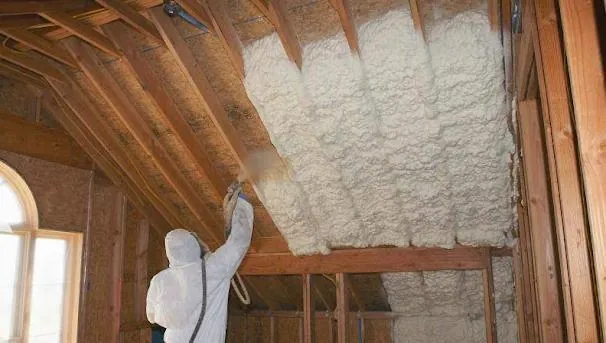
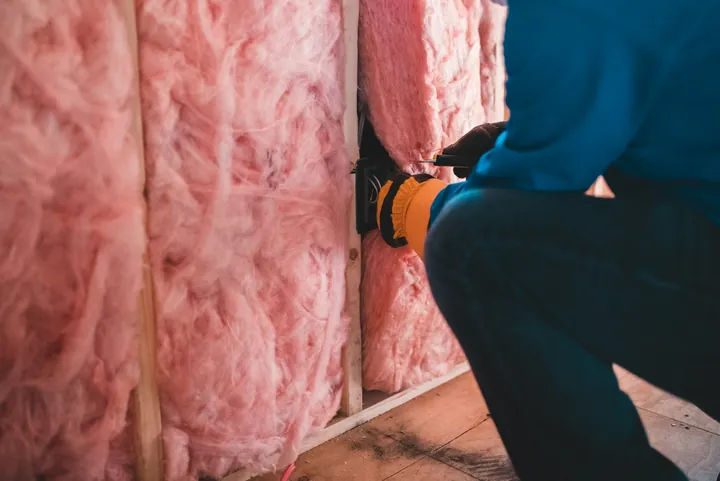
How we insulate depends on whether the wall is open or closed. During a renovation, with the drywall off, we can fit batts or spray foam right between the studs. In a finished house, we can often drill small holes between the studs and fill the cavity with dense-packed loose insulation, then patch the holes. That is a lot less disruptive than tearing the walls open.
Signs your walls need insulation
- Outside walls feel cold to the touch in winter
- You feel drafts or cold spots along outside walls and corners
- A renovation has opened up wall cavities that are empty
- You hear every bit of street noise through the walls
- Your house was built before insulation was common
How the job goes
Check the wall
We confirm what is in the cavities and whether they are open, closed or blocked.
Pick the method
Open walls get batts or foam. Closed walls usually get dense-pack fill through small holes.
Cover and prep
We protect floors and furniture and mark where we will drill.
Install
The cavities get filled evenly, without gaps or voids.
Patch
We plug and patch the holes so they are ready for paint.
What it does for you
Warmer, quieter rooms
Insulated walls cut drafts and dampen outside noise.
Little disruption
Dense-pack fill avoids tearing out finished walls.
Good with renovations
When the walls are open, insulating them is easy and efficient.
What affects the job
The method and the effort depend on how the wall is built. Open stud bays during a renovation are the easiest to fill. Closed walls need drilling and filling. Walls with fire blocking, wiring or plumbing inside need more careful work. Brick, siding and plaster each behave differently when drilled.
The outside finish and the size of the cavity matter too. We check whether a cavity is deep enough to be worth filling and whether there is any moisture. If a wall is damp, insulating it is the wrong first step, and we say so. For the finish, we plug and patch every access hole so it is easy for you or your painter to complete.
Where we do this work
We provide wall insulation throughout Elizabeth, including Elizabethport, Downtown Elizabeth, Midtown, North Elizabeth, Elmora and the surrounding area, and in nearby towns such as Hillside, Roselle, Roselle Park, Union, Linden. Wall work is often part of a whole-home insulation upgrade, and open walls can also take spray foam insulation.
Common questions
Can you insulate walls without removing drywall?
Often, yes. We drill small holes, fill the cavity and patch them.
How do you know there is no insulation already?
We look through outlet openings or small test holes, or from the attic or basement, to see what is inside.
Could wall insulation cause moisture problems?
If a wall already has a moisture problem, it has to be fixed first. We check for signs of leaks before filling cavities.
Do I need to repaint the patched holes?
We patch and sand them, but you will need to paint to match the wall.